
Leipzig: Thoracoscopic treatment of chronic cardiac arrhythmias
When 59-year-old retail entrepreneur Ulrich Wenk fell off his bicycle in 2017, a physician diagnosed him for the first time with cardiac arrhythmias. This matched the symptoms he had been experiencing for quite some time: his heart would skip beats, his physical endurance declined, and he frequently suffered from shortness of breath. This marked the beginning of a long medical journey through various clinics and treatment approaches. Only thoracoscopic ablation performed at the Leipzig Heart Center in the spring of 2024 was able to resolve his arrhythmias on a long-term basis.
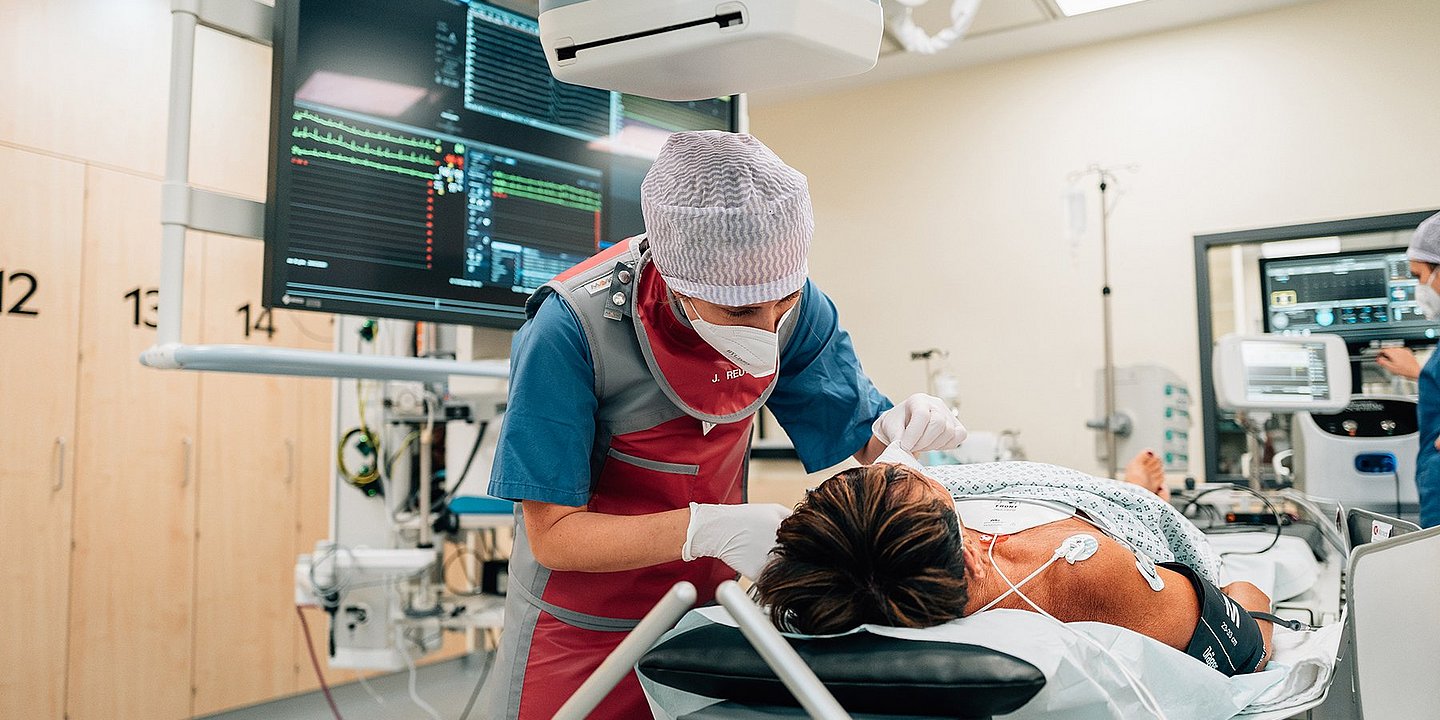
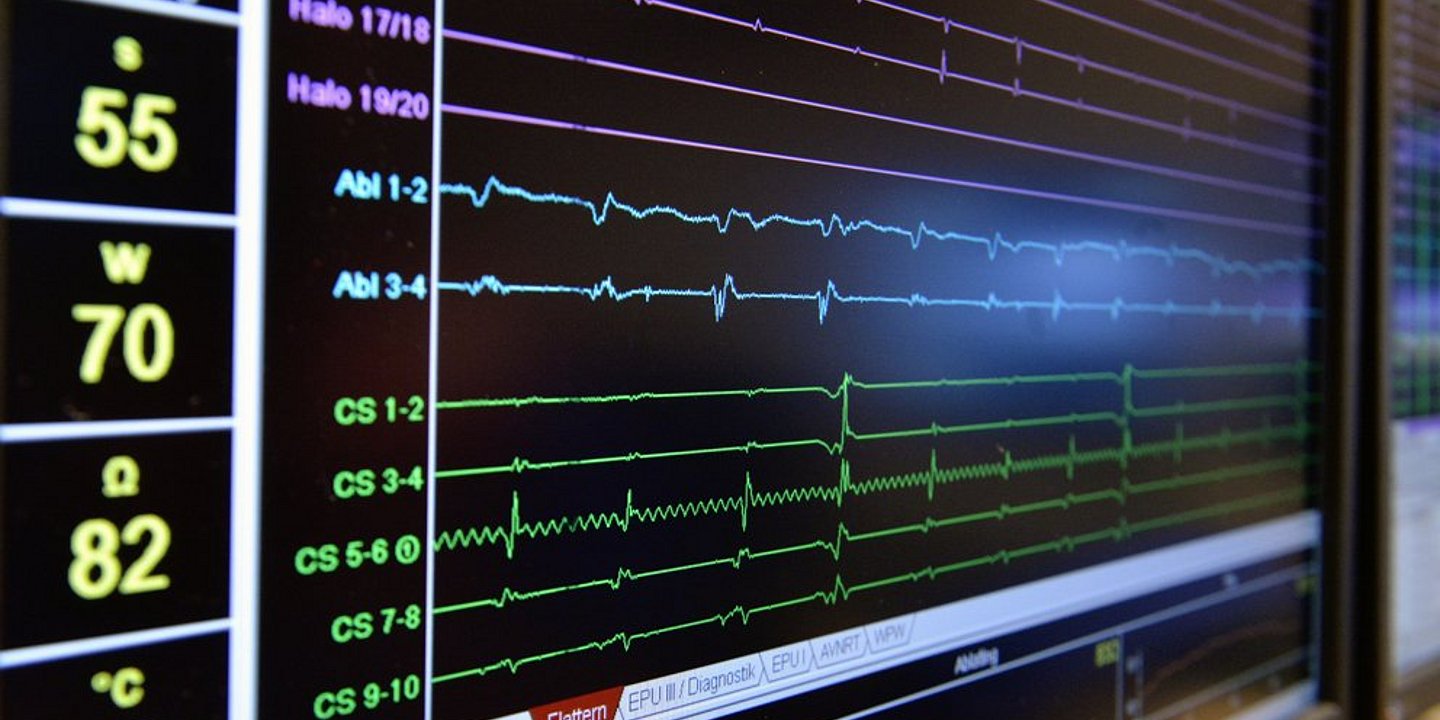
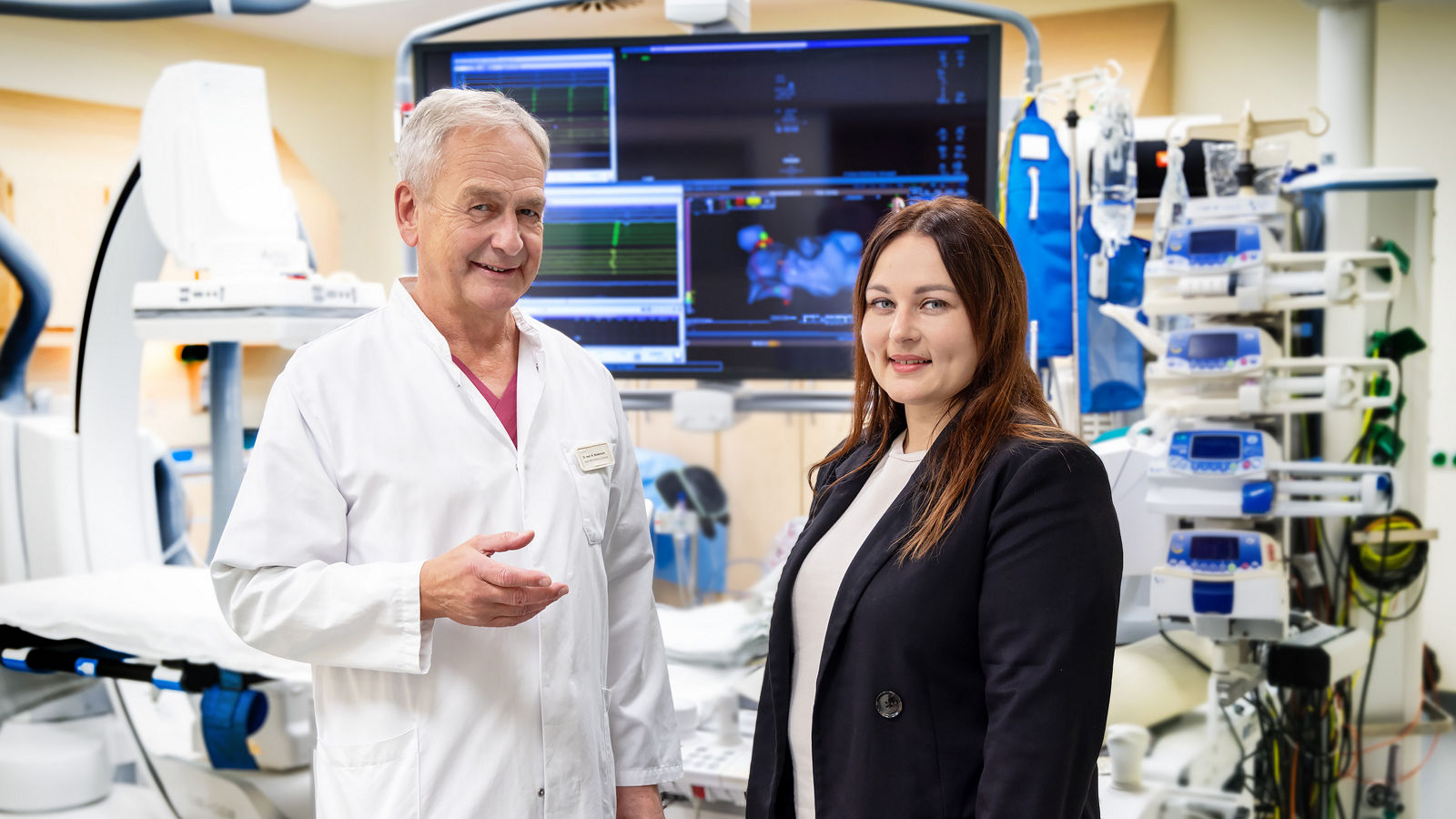
Priv.-Doz. Dr. med. Kerstin Bode, Head of the Department of Cardiac Electrophysiology in Leipzig Heart Center explains which methods are used to treat this condition: "Using an ablation catheter, targeted areas of cardiac tissue can be precisely ablated in order to treat cardiac arrhythmias. The catheter is inserted via an access point in the groin and advanced from the right atrium into the left atrium. There, the ostia of the pulmonary veins are ablated, thereby eliminating the cardiac muscle cells responsible for triggering the arrhythmia. The procedure can be performed using cold (cryoablation), heat (radiofrequency ablation), or electrical impulses (electroporation)."
Mr. Wenk was initially also treated with catheter ablation. “Over the course of seven years, I underwent a total of three ablation procedures, which were only able to relieve my symptoms temporarily. After some time, however, my fitness watch repeatedly showed an irregular pulse. I was still unable to tolerate physical exertion, had to take it easy, and was unable to do any sports,” reflects the 59-year-old patient from Werdau.
Dr. med. Mateo Marin-Cuartas, specialist in cardiac surgery at the Leipzig Heart Center, adds: “As a rule, one ablation — and in some cases a second procedure — is sufficient to achieve long-term control of cardiac arrhythmias. However, in a small number of patients, the arrhythmias may still recur. This is where the cardiac surgical approach of thoracoscopic ablation comes into play. Through a minimally invasive access on the side of the chest, we are able to directly reach the affected tissue using an ablation device and additionally ablate the arrhythmia triggers from the outside of the heart. Furthermore, a clip can be used to close the left atrial appendage, an outpouching of the atrium where blood clots may form and which are often the cause of strokes. In this way, both the arrhythmias and the risk of stroke are addressed.”
The “Hy5” of Thoracoscopic Ablation
1. In the first step, during pulmonary vein isolation, the areas surrounding the pulmonary veins are ablated from the outside inward in order to interrupt abnormal electrical signals.
2. At the same time, the posterior wall of the left atrium is electrically isolated by targeted ablation in the form of a so-called box lesion. With these first two steps, approximately 90 percent of the triggers of atrial fibrillation can already be eliminated.
3. As part of left atrial appendage management, the left atrial appendage is closed to reduce the risk of stroke.
4. In addition, the ligament of Marshall, a small band within the heart that can contribute to atrial fibrillation, is transected to prevent recurrences.
5. Following the procedure, monitoring ensures close and continuous surveillance of the heart rhythm.
Read more:
Do you need more information about Helios Hospitals or want to schedule your treatment?