Leipzig: Treatment of a Rare Form of Cancer in a Mother and Son
In the 1990s, Gerlinde Keil underwent surgery for a thyroid disorder for the first time. Two years later, she was diagnosed with an adrenal gland disorder as well as additional hyperfunction of the parathyroid glands. All examinations, including genetic analyses, subsequently confirmed the diagnosis: in multiple endocrine neoplasia (MEN), benign or malignant tumors develop simultaneously in several endocrine glands. Organs that may be affected include the parathyroid glands, pancreas, adrenal glands, thyroid gland, and the pituitary gland. Depending on the specific mutated gene involved, four different hereditary types are distinguished. Mrs. Keil was affected by MEN 2A. This type is characterized by the development of prognostically relevant medullary thyroid carcinoma, adrenal tumors (so-called pheochromocytomas), and hyperfunction of the parathyroid glands.
"In Mrs. Keil’s case, the disease was identified through a thyroid carcinoma and a subsequently detected benign adrenal tumor. Multiple endocrine neoplasia has been known since the 1960s and is classified as a rare disease. Thanks to the diagnosis, we were able not only to provide her with the appropriate therapy, but also to help her son at an early stage."
– says Prof. Dr. med. Peter Lamesch, Chief Physician of Endocrine Surgery at Helios Park-Hospital Leipzig
Genetic screening revealed that one of her two sons was also affected by the gene mutation.
“By removing his thyroid gland at an early age of six, we were able to protect him from a potential tumor development later in life. The probability of developing thyroid cancer in MEN2a can be as high as 100%. Therefore, surgery was unavoidable—at the time, it was performed very early, yet successfully. He is now 38 years old and remains tumor-free to this day,” explains Peter Lamesch.
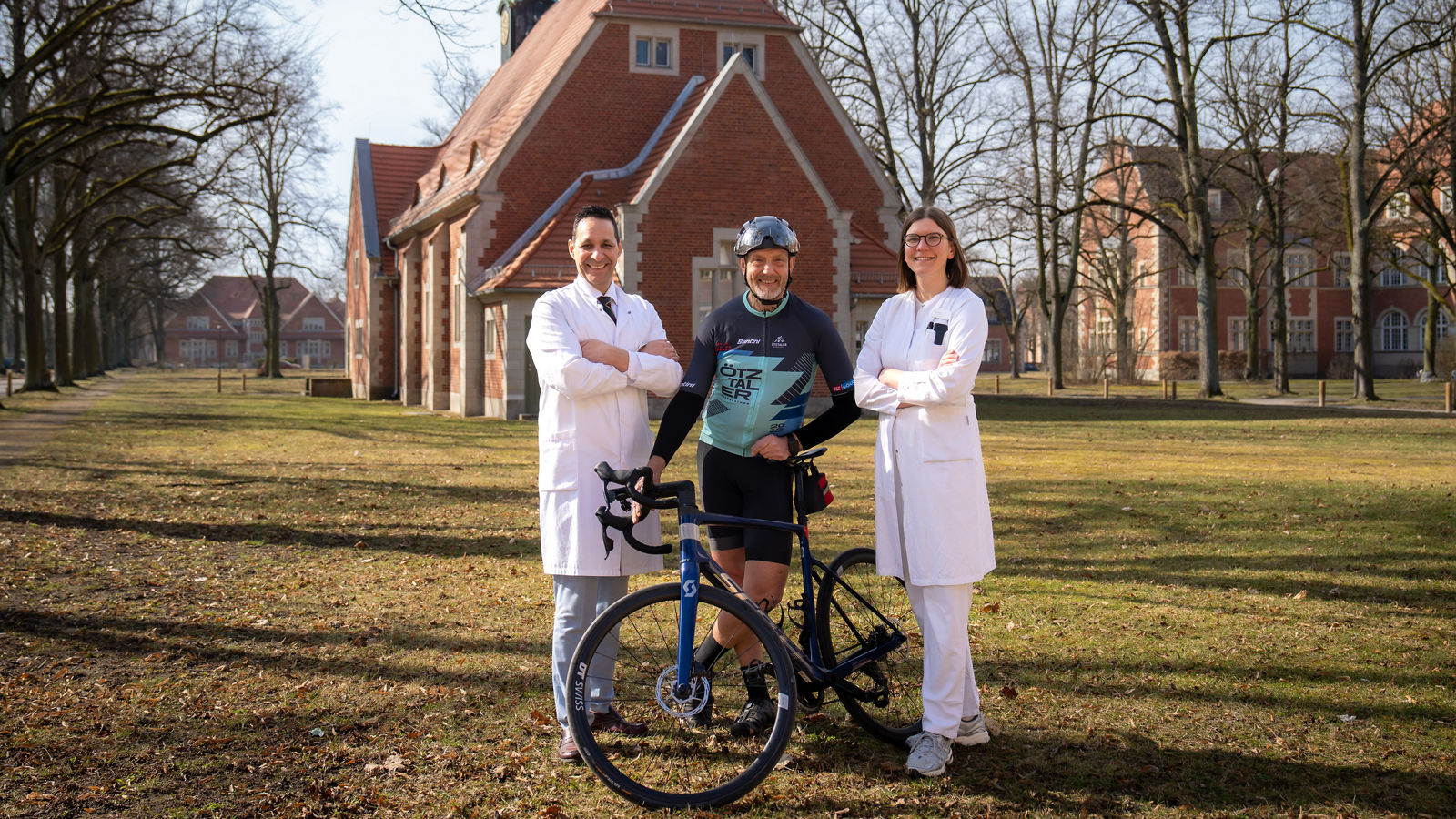
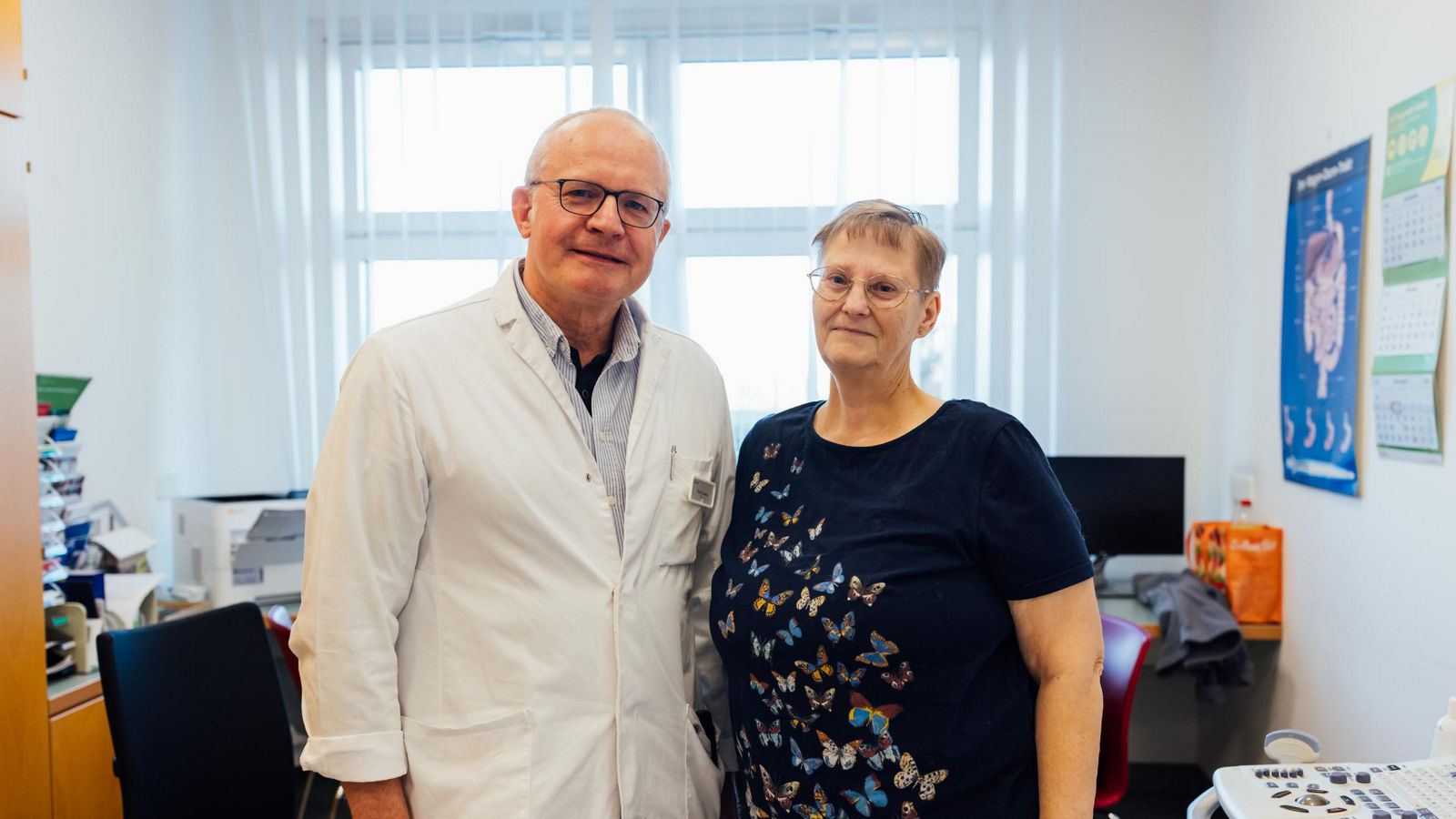
In the 1990s, medical experts assumed that Mrs. Keil would eventually die from the tumor. As a patient case, she and her son—both affected by this rare disease—were also part of an informational event for physicians at the time. Despite multiple reoperations involving the removal of lymph nodes in the head and neck region as well as the removal of a liver metastasis, the patient has never been completely cured to date. “What is remarkable—though by no means a given—is that despite persistently elevated tumor markers (calcitonin) in laboratory tests indicating tumor persistence, Mrs. Keil has been able to lead an almost normal life up to this day,” summarizes Prof. Lamesch. She is now 65 years old and visited Prof. Dr. med. Peter Lamesch for a follow-up examination just a few weeks ago. The specialist in endocrine surgery has been caring for and treating the patient for 32 years.
Treatment of Endocrine Disorders at Helios Park-Hospital Leipzig
Diseases of the thyroid gland are considered widespread conditions. Approximately one third of the German population suffers from pathological changes of the thyroid. Prof. Dr. med. Peter Lamesch is a specialist in general surgery, endocrine surgery, and hepatopancreatobiliary surgery. With many years of experience and expertise in thyroid surgery, he treats patients as Chief Physician at Helios Park-Hospital Leipzig using state-of-the-art diagnostic methods, the latest surgical techniques, and innovative therapeutic approaches. Appointments can be scheduled via the patient portal on the clinic’s website.
Read more:
Do you need more information about Helios Hospitals or want to schedule your treatment?