Helios Bad Saarow: New robotic angiography system
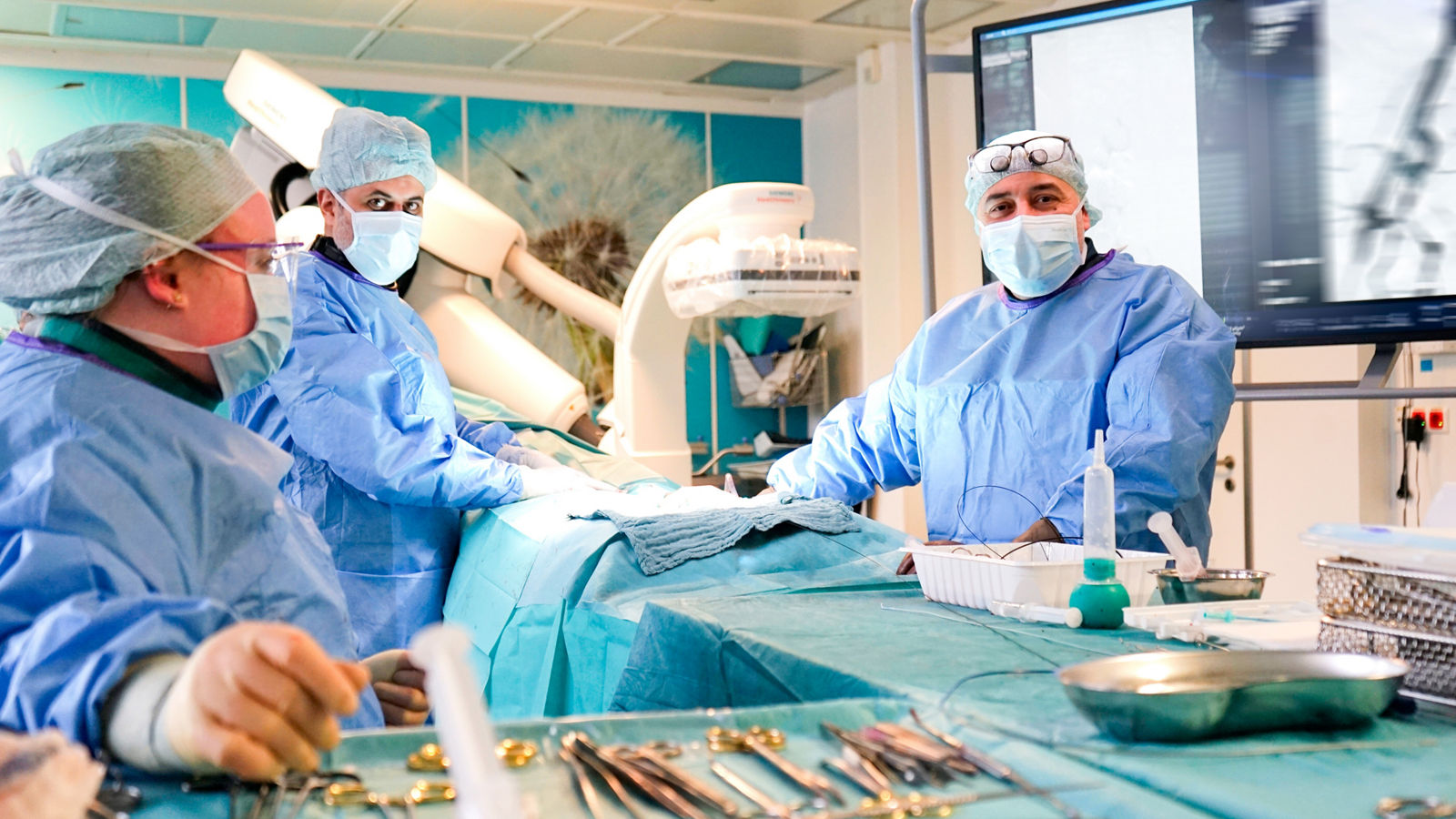
At Helios Hospital Bad Saarow, a new state-of-the-art robotic angiography system enables highly efficient vascular treatment in the operating room. Robotic imaging for minimally invasive procedures is particularly beneficial for high-risk patients, allows arterial surgeries to be performed with virtually no blood loss, and significantly reduces radiation exposure for both staff in the hybrid operating room and patients. In this operating room, a fully equipped surgical suite is combined with integrated high-resolution imaging, enabling physicians to perform surgery and diagnostics simultaneously. As a result, hybrid procedures significantly reduce risks compared to conventional surgery. For certain indications, a three-dimensional visualization of blood vessels (angiography) can be created intraoperatively — that is, during the procedure.
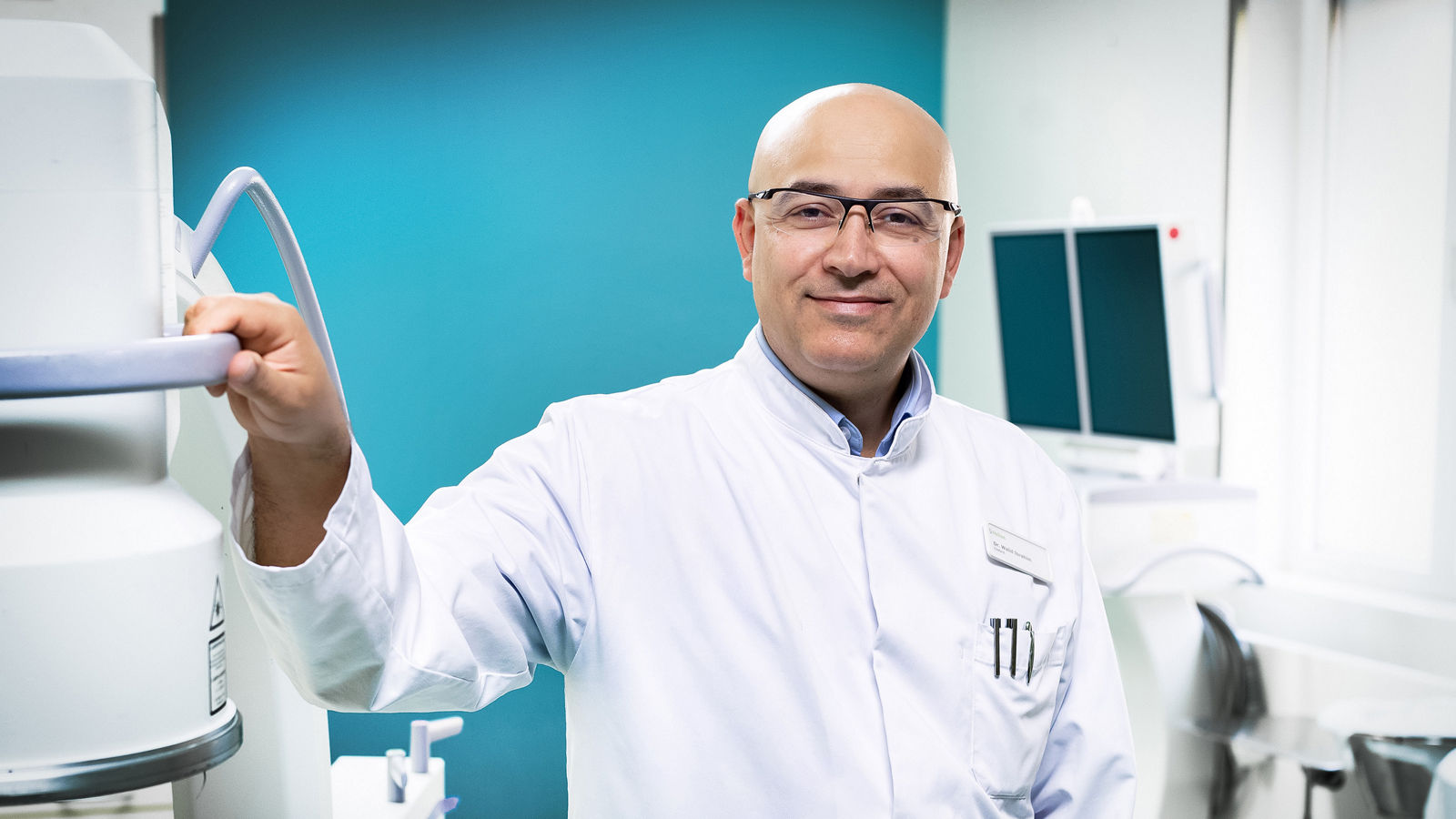
Walid Ibrahim, Head of the Clinic for Vascular and Endovascular Surgery / Phlebology at Helios Hospital Bad Saarow, says:
“We perform vascular surgeries daily in the hybrid operating room. In particular, for patients with arterial diseases, such as aneurysms—meaning large bulges in the main arteries—these procedures are extremely complex. We can quickly move the robotic arm aside when necessary. This is very practical: the device remembers the exact same imaging position. As a result, we save valuable time during surgery.”
A robotic arm enables use at different working heights and positions, as the isocenter adapts to the operator’s natural working height. This flexible isocenter allows full table tilt capabilities and also enables the system to be used with a segmented operating table.
CO₂ as a contrast agent, for example, is approved only for vessels below the diaphragm. To prevent distribution toward the head — with the risk of CO₂ embolism — patients are positioned in a head-down tilt. The robotic arm also allows easy movement along an angled or tilted table plane, which is particularly important for intraoperative CO₂ angiography in patients with chronic kidney disease stages III and IV.
Walid Ibrahim adds:
“I am very pleased that we can now use this state-of-the-art robotic angiography system. With the new systems, we are able to treat our patients even more precisely and more gently than before. Thanks to the latest medical technology, we provide top-level medicine and thus offer the best possible care at the highest standard.”
Read more:
Do you need more information about Helios Hospitals or want to schedule your treatment?